Summoner's Gambit Guides Hub
Strategy deep-dives for Billion Studio's cosmic horror deckbuilder auto-battler.
Why this Guides Hub exists
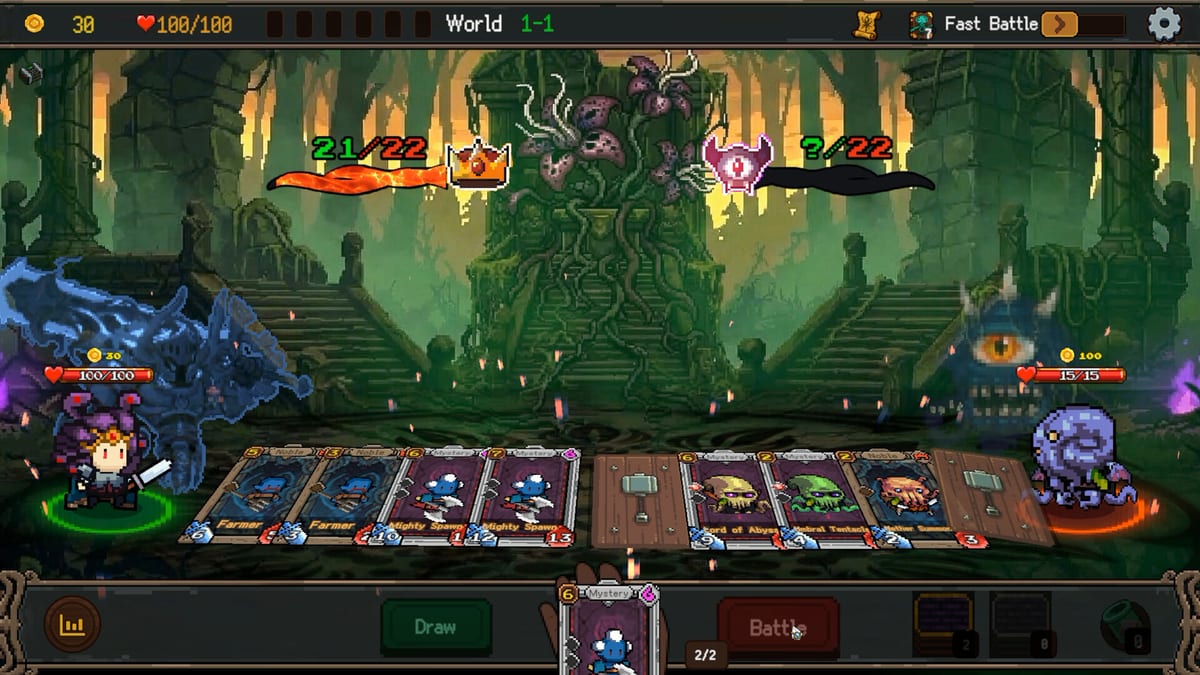
Summoner’s Gambit mixes roguelike deckbuilding with auto-battler positioning and a blackjack-style energy rule that punishes careless greed. You summon sealed creatures, fuse traits into stronger hybrids, and eventually test those decks in asynchronous PvP. After the August 6, 2026 Steam launch, community clears also crystallized around First Strike opens and score control dumps—this hub maps every major system guide so you can jump from first-run advice to boss scripts without guessing which mechanic matters next.
If you are brand new, start with Getting Started for class choice, early formation habits, and how a typical run unfolds. When energy starts deciding fights more than raw card power, read Energy Overflow next—it explains bust risk, safe ceilings, and when Cheat the Odds is worth the gamble. Once you can survive, graduate into the meta spine: First Strike for attack-priority deletes, Score Control for exact hand dumps, and Boss Walkthrough for multi-hit finales.
Core systems every summoner should master
Positioning is not cosmetic. Attack order and skill range change who dies first, which auras land, and whether a backline caster ever gets a turn—study Formation before you blame your deck. Pair seating practice with class pages under Builds (including the First Strike Build) and rankings in the Tier List so you know which creatures deserve front-row space.
Once your deck has spare copies and conflicting traits, Card Fusion shows how inheritance turns two mid cards into a board-defining hybrid—especially when you are importing First Strike onto a high-attack body. Economy and modifiers live in Items—runes and potions reshape risk tolerance around Energy Overflow. When you want planning tools rather than prose, open Tools. Patch notes and balance swings belong in Updates. For a site-wide overview of pages and terms, use the Wiki index.
Multiplayer and challenge ladders
Async PvP unlocks after you prove basic competence (around character level 3 in the demo; the full release expands the ladder). Async PvP covers snapshot decks, counter-formation thinking, and why a deck that clears PvE bosses can still fold to mirrored energy pressure. After the campaign climax, Ascension walks Advanced and Endless challenges—modifier stacks that force leaner decks, stricter score control, and fusion plans that survive longer maps.
Practical navigation
Need bindings, UI flow, or battle-prep shortcuts? See Controls. Shopping the game or weighing tone versus systems? Read the Review for strengths, caveats, and who should buy at the ~$7.99 Steam price (AppID 3570110).
Cross-link habit: every guide below links siblings on purpose. First Strike pages send you to score control and boss scripts; energy pages send you to fusion when overflow builds need denser traits; PvP pages send you back to formation; Ascension pages demand all of the above. Use this hub whenever you finish a run and want the next skill to grind instead of repeating the same comfortable loop.
Recommended reading order
- Getting Started — classes, first formation, run structure.
- First Strike — why 先攻 deletes win packed fights.
- Energy Overflow — blackjack energy, bust, Cheat the Odds.
- Score Control — hide one card, dump a clean total.
- Card Fusion — trait inheritance and upgrade timing.
- Boss Walkthrough — how to beat multi-hit finales.
- Formation — seating, attack order, skill range.
- Async PvP — ladder mindset after early unlocks.
- Ascension — Advanced / Endless challenge planning.
- Controls — interface fluency so decisions stay fast.
- Review — purchase fit and tone check.
Nav tip: the top bar shows a compact Guides dropdown (max eight entries) and routes overflow to this hub—open the full list here anytime.
Keep the Tier List and Builds open beside these guides when you theorycraft. The Old God does not reward one-note decks—Summoner’s Gambit rewards players who can fuse, position, score energy, and delete early as one loop.
Frequently Asked Questions
Quick answers to the most common questions.
Which Summoner's Gambit guide should I read first?
Start with Getting Started, then First Strike and Energy Overflow before you push bosses, Ascension, or async PvP.
What is score control?
Planning hand costs so you can dump a full turn under the soft energy cap—often with one card held back. See the Score Control guide.
Do these guides cover Roblox codes or scripts?
No. Summoner's Gambit is a Steam deckbuilder/auto-battler by Billion Studio. This wiki focuses on strategy systems, builds, and challenges.
Where do runes, potions, and card rankings live?
Use Items for runes and potions, Tier List for rankings, and Builds (including First Strike Build) for class-focused decks.
Is Ascension required after beating the final boss?
Not required to finish the story, but Ascension, Advanced, and Endless modes are the intended long-term challenge ladder once campaign content is cleared.